Wet Wednesday Webinar: Stopping Storm Overflows with Keith Herbert from Southern Water
- Details
- Category: Environmental Issues
- Hits: 224
Keith Herbert from Southern Water, discusses how to stop raw sewage being released into the environment in December's Wet Wednesday Webinar.
The spilling of raw sewage into our rivers and seas via the use of storm overflow pipes, also known as Combined Sewer Overflows (CSOs) has been the subject of shocking news headlines for several years. Combining raw sewage with other pollutants in rainfall runoff from pavements and roads, these overflows discharge a very wide range of contaminants into our waterways. But what is being done about it?
Keith has worked in the water industry for nearly 20 years and has dedicated the last 4 years to reducing the use of storm overflows. Keith discusses how raw sewage gets into our waterways and presents a range of methods for reducing the use of storm overflows from permitting, optimisation to catchment investigation and sustainable drainage systems (SuDS).
You can watch the webinar at the link below:
Loddon Barbel 2025
- Details
- Category: Conservation
- Hits: 695
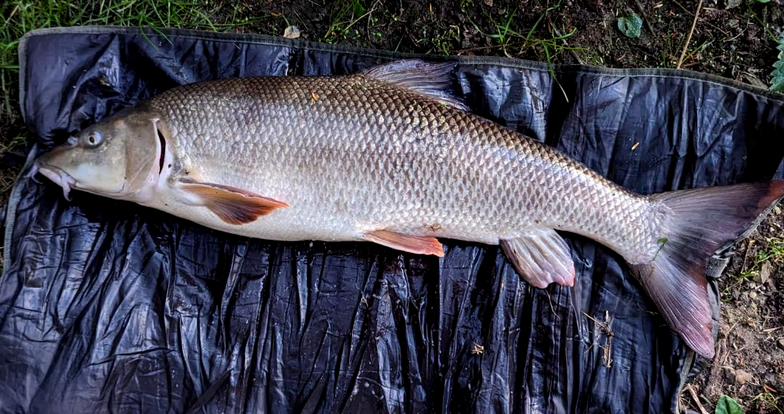 What is the fixation about barbel?
Barbel are arguably the 'non-migratory' fish species that is under the most pressure in our local rivers. Water conditions, gravel quality, predation and their relatively low fecundity are amongst the challenges that are faced to sustain recruitment in any waters where they occur but these do appear to be restricting the population size, possibly even the perpetuation of the species, in the Loddon.
Aim.
To have a naturally self sustainable population of fish that are native to the River Loddon and its tributaries.
Actions.
The LFCC has actively supported measures to maintain the barbel population in the catchment, efforts that have included introduction of fresh gravel, improvements in connectivity between stretches, partnering initiatives to monitor water quality, and also assist with co-ordinating introductions and attempting to monitor their benefits.
The Loddon has recently received further introductions of fish from the Environment Agency's Calverton Fish Farm. This included 500 barbel released on the Civil Service stretch at Stanford End with a further 500 into St Patricks Stream, Twyford & Districts water. Attempts are made to distribute and share out these introductions around the catchment on a year to year basis. The decisions are influenced by the existence of an EASite Permit on the relevant stretch and we would remind any clubs that feel that they are 'missing out' to check that they have this permit. If unsure please contact
As with stockings during the last few years, the introduced barbel have all been batch marked. The details of these recent marked introductions are as below.
| Date | Number | River | Location | Angling Club |
| 27/03/15* | 30 | Loddon | Swallowfield | Swallowfield FC |
| 10/11/22 | 300 | Loddon | Whistley | Reading & DAA |
| 23/11/23 | 300 | Blackwater | Yateley | Farnham AS |
| 23/11/23 | 300 | St Patricks Stream | Charvil | Twyford & DAA |
| 14/11/24 | 300 | Blackwater | Swallowfield | Swallowfield FC |
| 14/11/24 | 300 | St Patricks Stream | Charvil | Twyford & DAA |
| 05/11/25 | 500 | Loddon | Stanford End | Civil Service AS |
| 05/11/25 | 500 | St Patricks Stream | Charvil | Twyford & DAA |
Many of these introductions were also accompanied by introductions of unmarked chub, dace & roach
*There were further unmarked barbel introduced as part of this stocking at Riverside Park (Southlake AS), Charvil (Twyford & DAA), Dinton Pastures (WBC), and Sandford (Farnham AS).
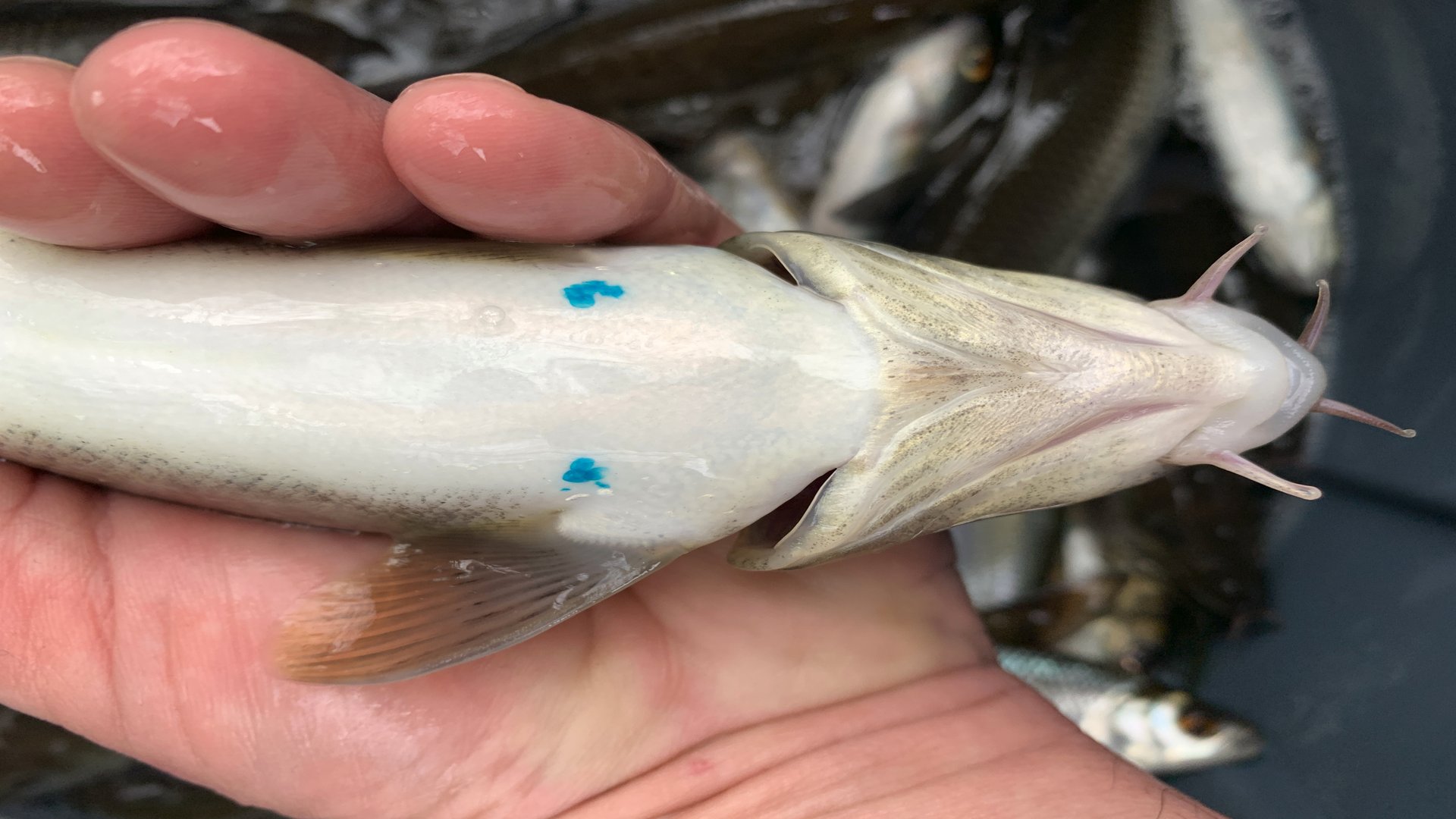
The reason for marking these fish is to attempt to gain post stocking information, particularly regarding their movements and growth. This can help to plan future stocking and also helps to assess the recruitment of 'home produced' fish. It also compliments some of the efforts undertaken by Swallowfield Angling Club who have been marking as many of the barbel caught in their waters as possible. These fish are all individually marked and photos of the underside of the fish will help identify those fish. Additional information particularly the length of the fish is greatly useful. Anyone reporting their catches on the LFCC site, will receive as much information about their fish as is available. This information can be logged using a link on the LFCC web site.
https://www.lfcc.org.uk/about-us/report-a-barbel
A BIG THANK YOU TO THOSE WHO HAVE REPORTED THEIR CATCHES
There can be many reasons why stocked barbel indeed any fish species move following introduction. This is probably hardly surprising and one of the reasons for marking the fish is to attempt to gather information about such activity. Stimulants for these movements could include the 'shock' of release into new surroundings, accompanied by a requirement to look for a preferred habitat, which may include a natural tendency to shoal with similar sized barbel into an area where suitable food and security can be found. However it should also be noted that similar movements of 'home produced' barbel are also highly likely, and a perfectly natural behaviour for most fish species.
THE SONNING BARBEL
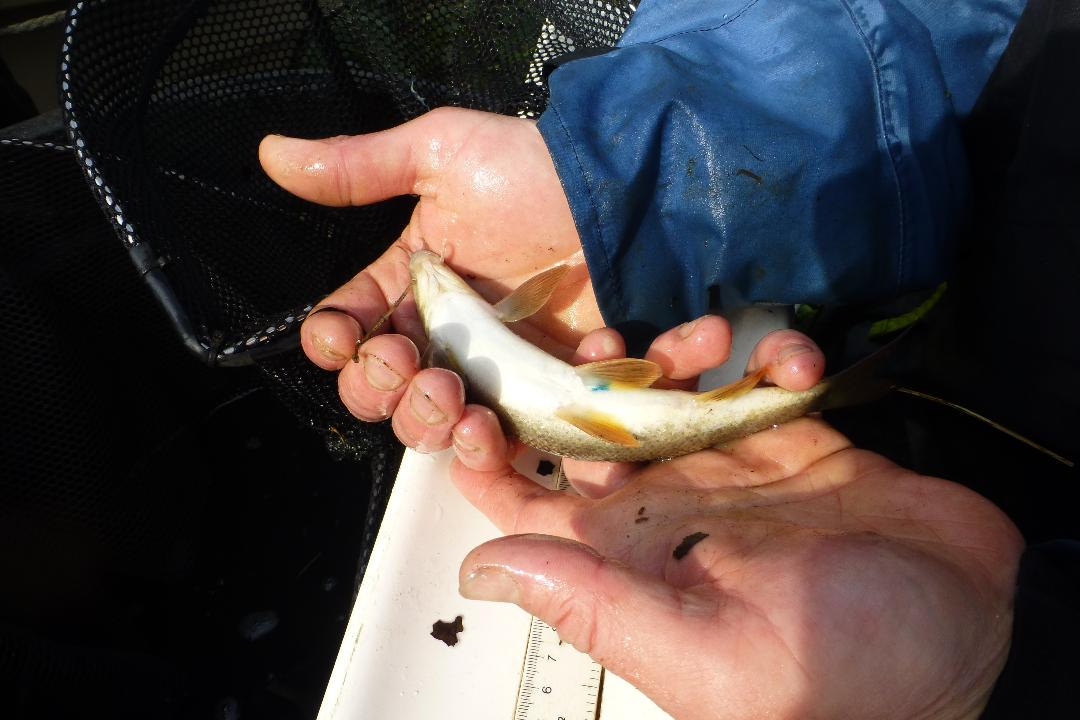
One report that has been received was concerning a barbel caught by an angler fishing in Sonning weir on the Thames during summer 2025. The captor noticed a single mark news of which was reported.
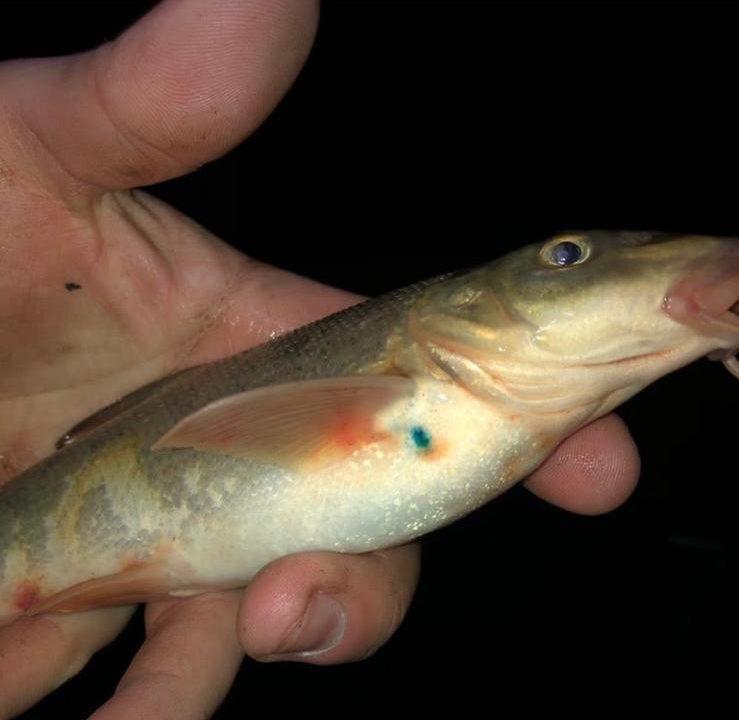
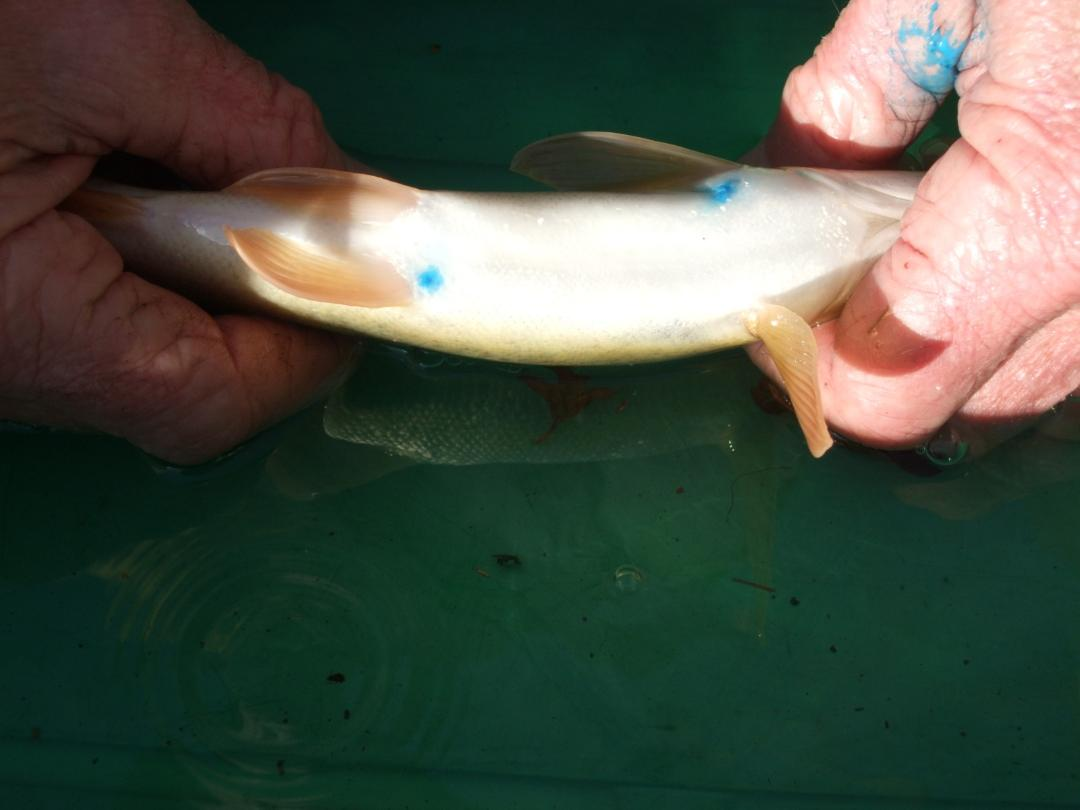
The 'Sonning barbel' on the left with one of the 2023 St Pats fish on the right
The Sonning fish raises a number of discussion points. All the actual evidence points to it being a fish stocked into the River Blackwater at Yateley in November 2023. If correct this would mean that it has moved down the River Blackwater to the Loddon, and then down to the Loddon to Charvil, where there are 2 possible routes into the Thames, either via St Patricks Stream (St Pats) or directly, just downstream of Shiplake weir. It would then have migrated upstream in the Thames to Sonning, a total of at least 22 miles. This at first glance appears to be a great distance, achieved in around 19 months. However there were significant floods during 2024 and early 2025, which would have facilitated the downstream passage to the Thames, from which point, the upstream segment of its journey would have been around 3 miles.
The other possibilities that have been considered (and which would have involved a far shorter migration) are that it was a the barbel stocked into St Pats. These include that it could have been one of a batch of barbel that Twyford and District AA purchased and introduced into St Pats in 2023 which were double marked. However the captor of the fish did not see any other marks, and although his finger partially covers the location where that mark would have been, it is highly unlikely that he could have missed the second mark, if it was as clear as the one in the photograph, It is also conceivable that the second mark was faulty or had faded. The final very unlikely occurrence is that the fish could have been one stocked by the EA in 2023 into St Pats. This batch were marked with a single blue mark behind the right pelvic fin, looking from below. However the “Yateley fish” were transported from Calverton on the same vehicle as part of the deliveries that day. There is an unlikely possibility that the fish could have accidentally become mixed with the St Pats fish. However the chance of this 'rogue' fish, one of the 300 stocked, being the only one of this batch to have been so far caught, is surely extremely low.
One observation regarding the Sonning barbel is that it does not appear to have grown to any great extent, whilst the scale loss in the picture may suggest it has had an encounter with a predator. This scale loss is likely to leave a scar that will stay with this fish during the rest of its life, and could help to track its future growth and movements.
OTHER RECAPTURES
The report of the 'Sonning barbel has been accompanied by further reports of marked fish.
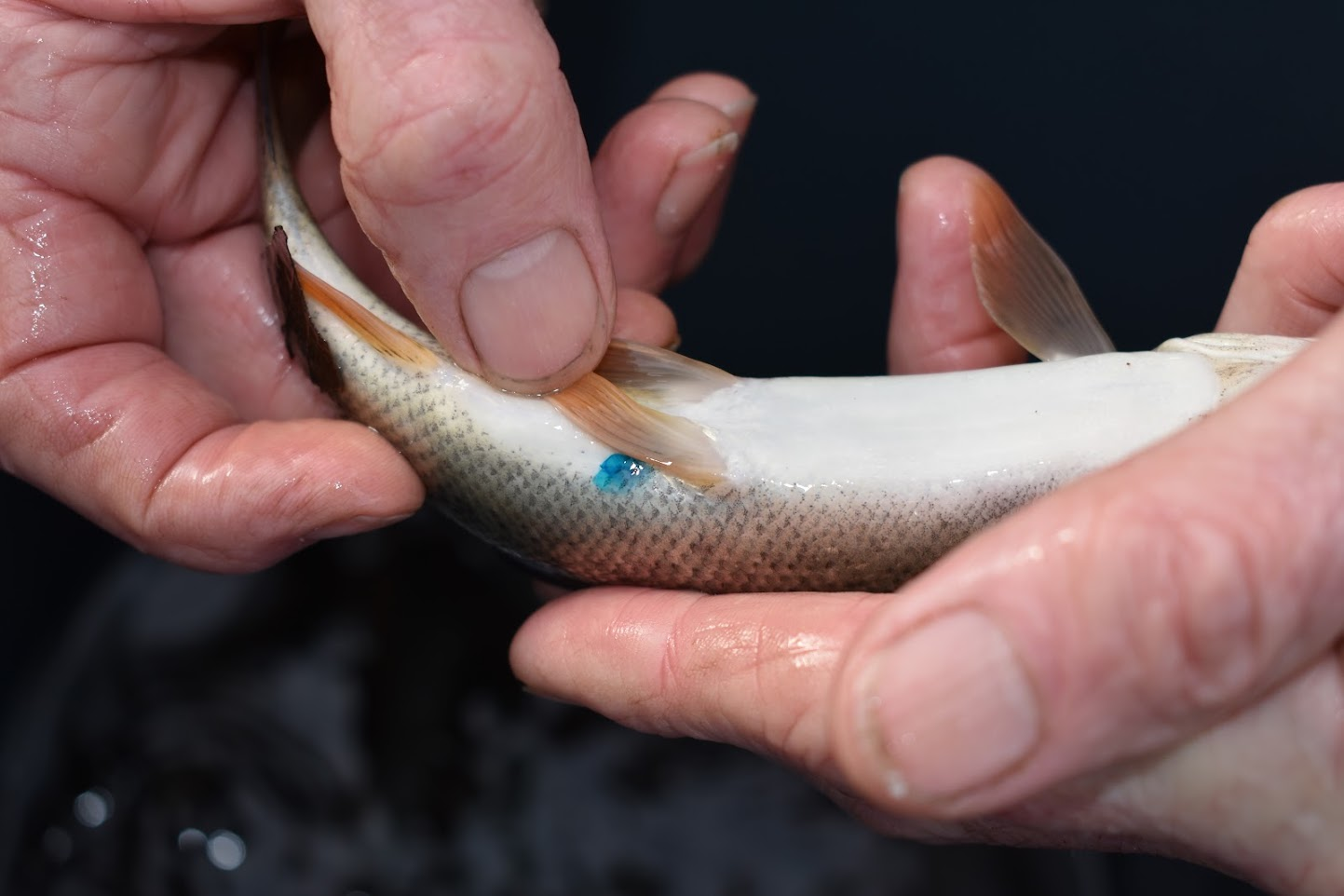
A 2024 Swallowfield marked barbel
The 2024 introduction into the River Blackwater at Swallowfield has resulted in both upstream and downstream movements. One fish was caught during an EA survey about 1.25 miles (2 km) upstream, a movement which included passage over a weir. However a fish from the same stocking was caught by angling over 3 miles (5 km) downstream. It should be noted that both these fish were caught alongside barbel of similar sizes that were unmarked, and certainly in the case of the downstream fish some of these barbel were smaller than those stocked, arguably eliminating the possibility of the loss of any mark.
The EA surveys are a route by which further information on our fish populations is gathered. They are not particularly frequent and due to the techniques available cannot access as great a range of habitats as would be ideal. This is one reason why the extra information gathered through angling catches is so valuable in building on our knowledge.
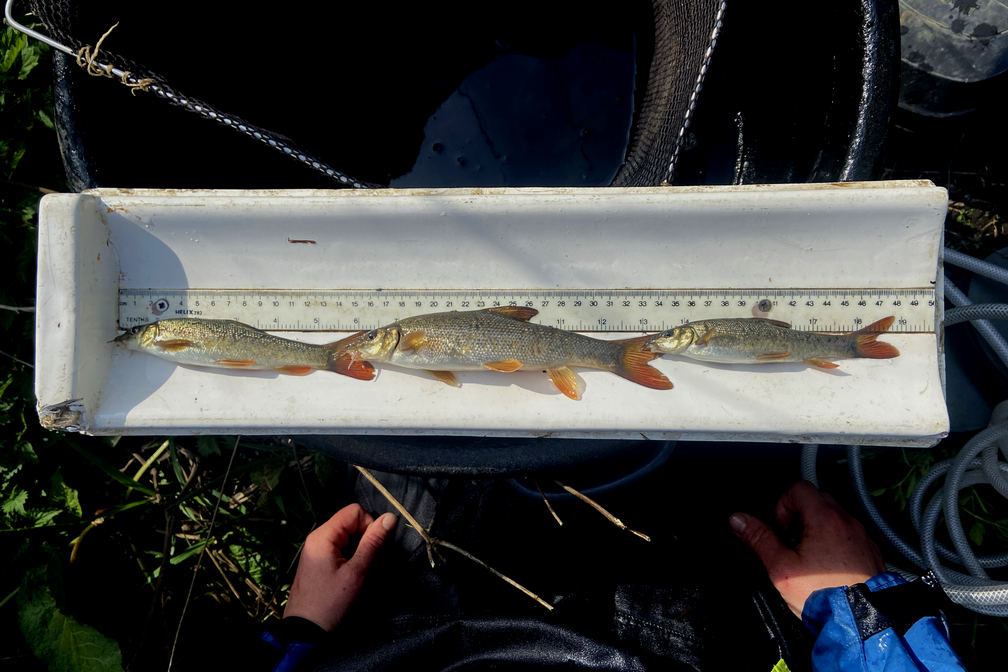
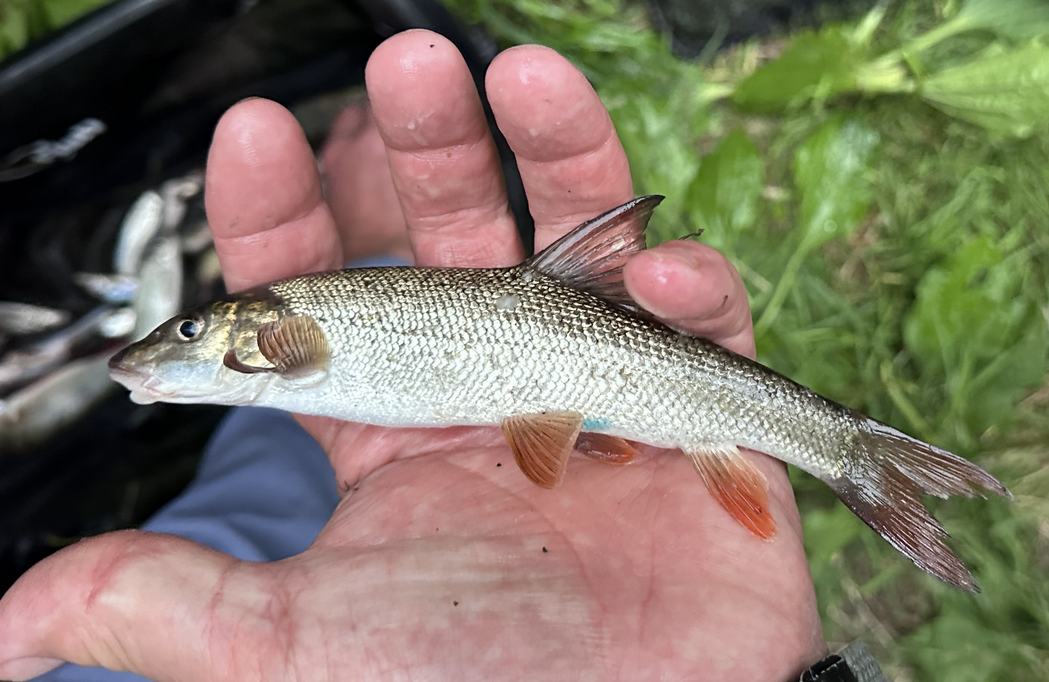
Left & Centre:Barbel caught during the EA Blackwater fish survey 14/4/2025. Right: Arborleigh match caught barbel.
It has also been noted that there have been other captures of barbel on St Patricks Stream stretch with no visible marks. There is suspicion that this could be due to marks fading, but the increased publicity of the releases could simply mean that anglers are looking for marks on their catches and simply notifying the capture of any small barbel. Even this piece of information could be regarded as signs that there is successful recruitment (spawning and subsequent growth) occurring in the Loddon catchment.
Please
- look for blue dye marks on any barbel you catch including the bigger fish.
- take a picture of the dye mark, both sides of the fish, record the length and weight if possible.
- send the information to Report a Barbel (lfcc.org.uk)
Help us to help YOUR river to have a healthy future fish population
If you would like this document in PDF format you can download from this link:https://www.lfcc.org.uk/downloads/20-lfcc-documents/2-other-lfcc-documents?download=274:barbel-returns-2025
5 free online skill-sharing sessions
- Details
- Category: Conservation
- Hits: 243
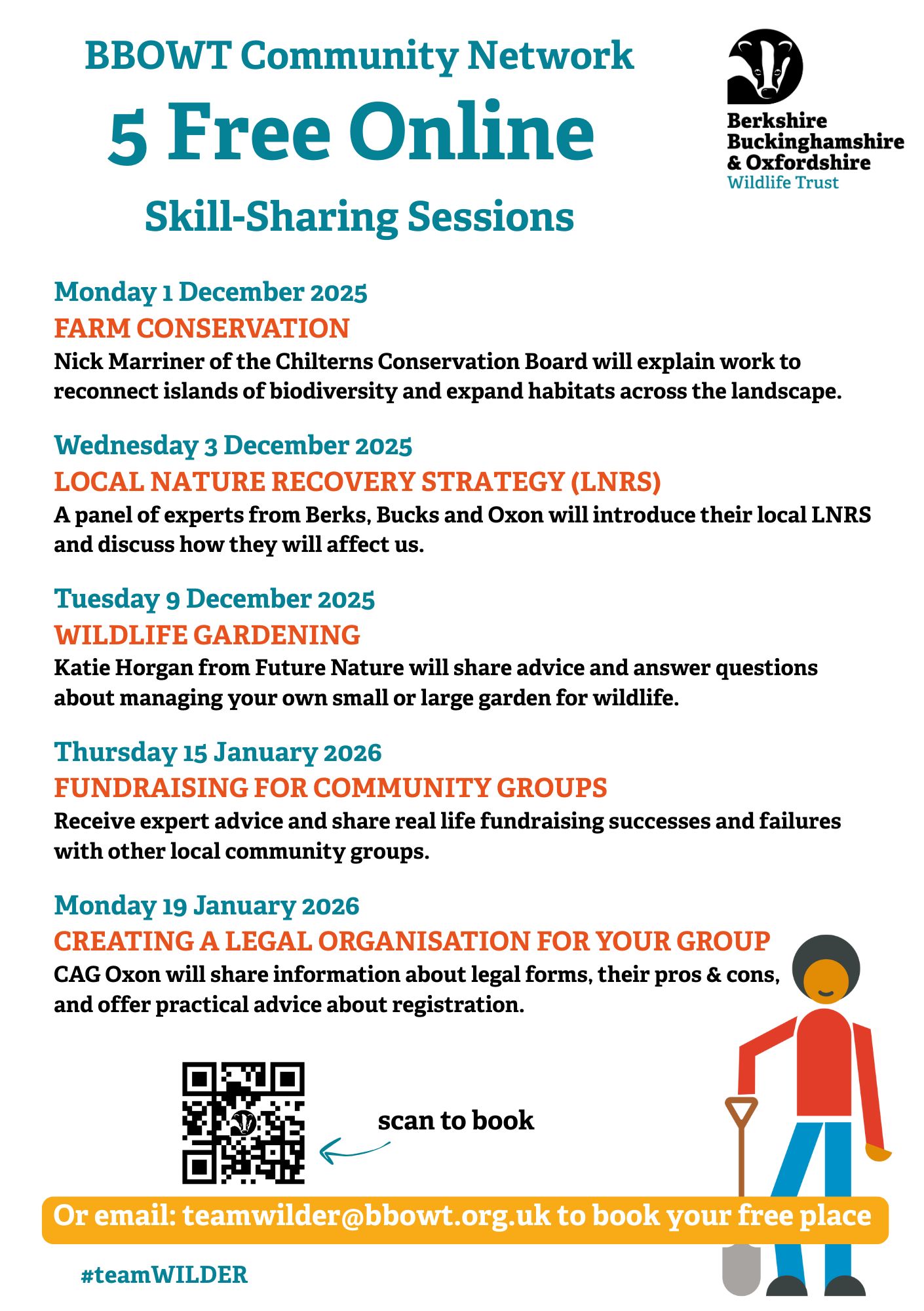
BBOWT Community Network is proud to offer 5 free online skill-sharing sessions this winter. Please see attached flyer for information.
Booking at the link below:
Pennywort Post - Autumn 2025
- Details
- Category: Invasive Alien Speicies (IAS)
- Hits: 209
The latest edition of the Pennywort Post is now available in our downloads section and at the link below.
River Loddon Receives Fish from Environment Agency’s Calverton Fish Farm
- Details
- Category: Conservation
- Hits: 264
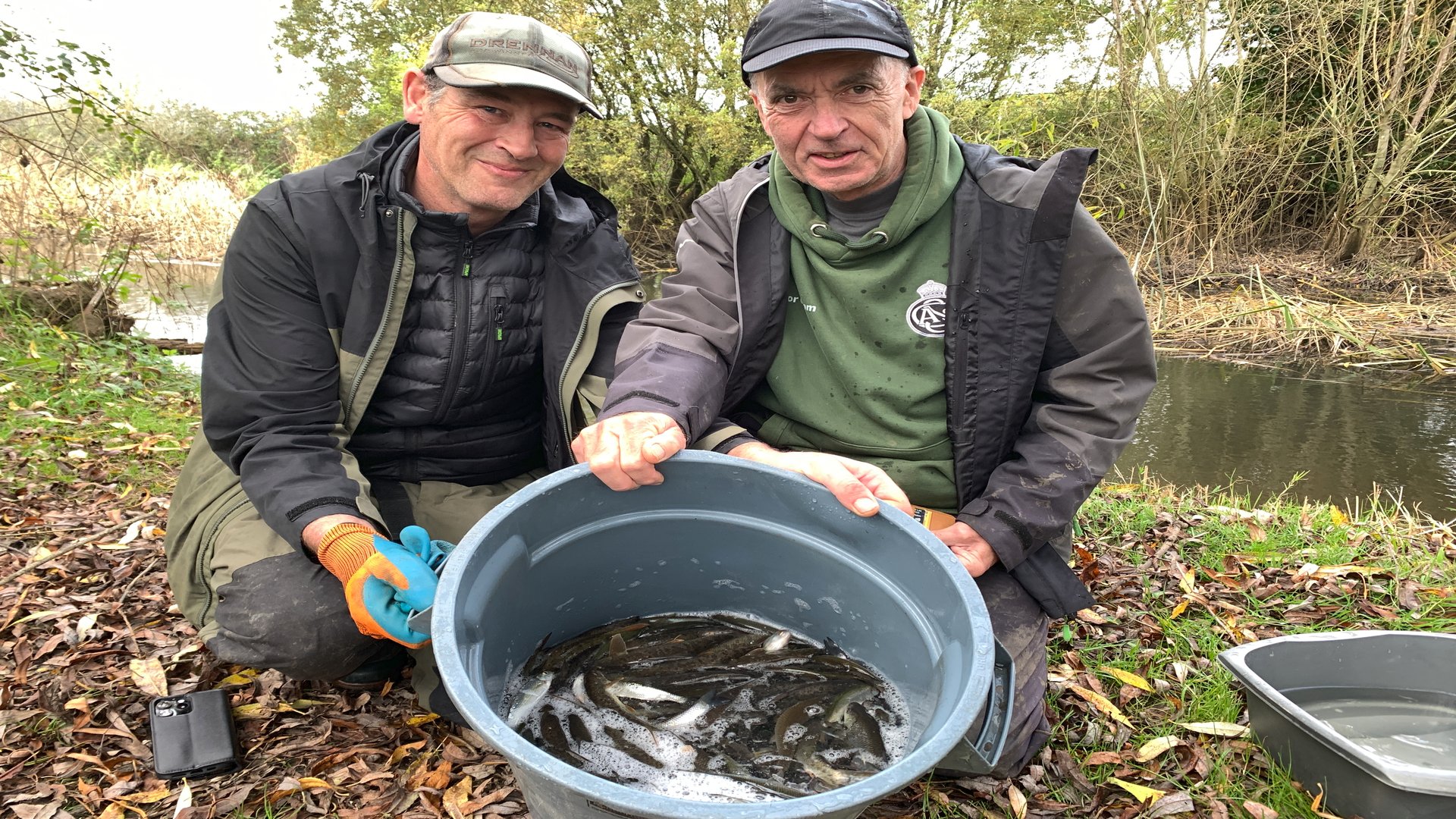
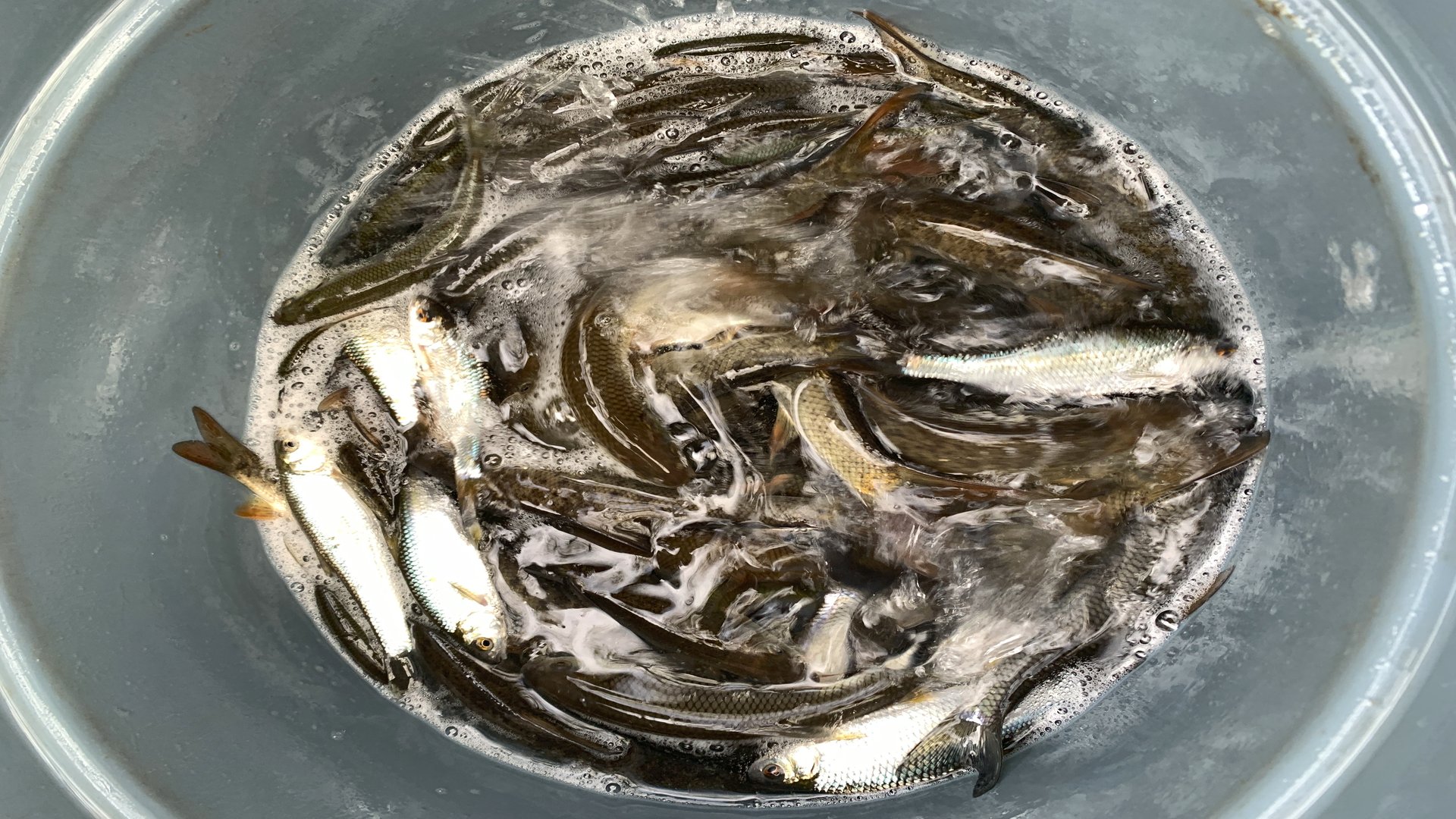
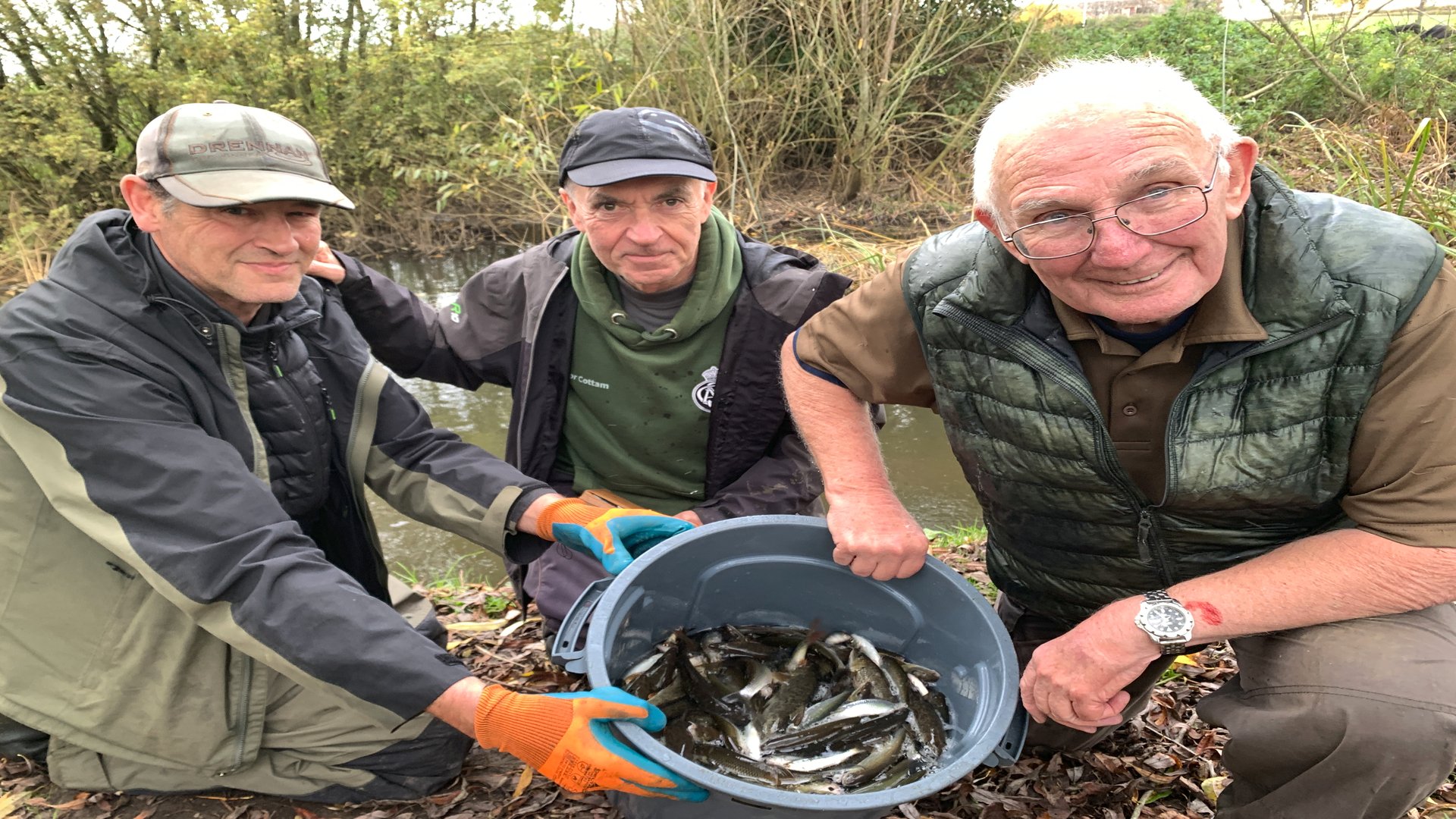
The Environment Agency’s Calverton Fish Farm delivered a batch of coarse fish which were delivered to the River Loddon at Stanford End. Coarse fish which comprised of 18-month-old roach, dace, chub and barbel travelled well in the oxygenated tanks following an early start from Calverton near to Nottingham.
The river Loddon was carrying little flow for the time of year, but the fish which had already grown well in earth ponds over the summer swam off strongly looking for instream cover from plants or woody debris. The stocking was overseen by both the Wellington Estate and Civil Service Anglers.
Barbel released into the Loddon have been marked with blue dye spots on the underneath of the fish. The EA has been working with the Loddon Fisheries and Conservation Consultative on a barbel releasing project for several years now and we have released several batches of fish in different locations in the Loddon Catchment. We hope to learn information on growth rates, survival and how far these fish move up or down stream from the release location. Please can anglers check any barbel captured for blue dye marks, take a photo, length and weight.
Please report captures to Loddon Fisheries and Conservation Consultative LFCC - Welcome to the Loddon Fisheries & Conservation Consultative Report a barbel.
The Environment Agency’s Calverton Fish Farm produces approximately 400,000 coarse fish a year which are distributed around the country to rivers, still waters and waterbodies where habitat improvement work has been carried out, where a fish mortality has occurred or we are trying to develop a fishery.
For any further information please contact
Page 2 of 30